Author: Kurt Schauer
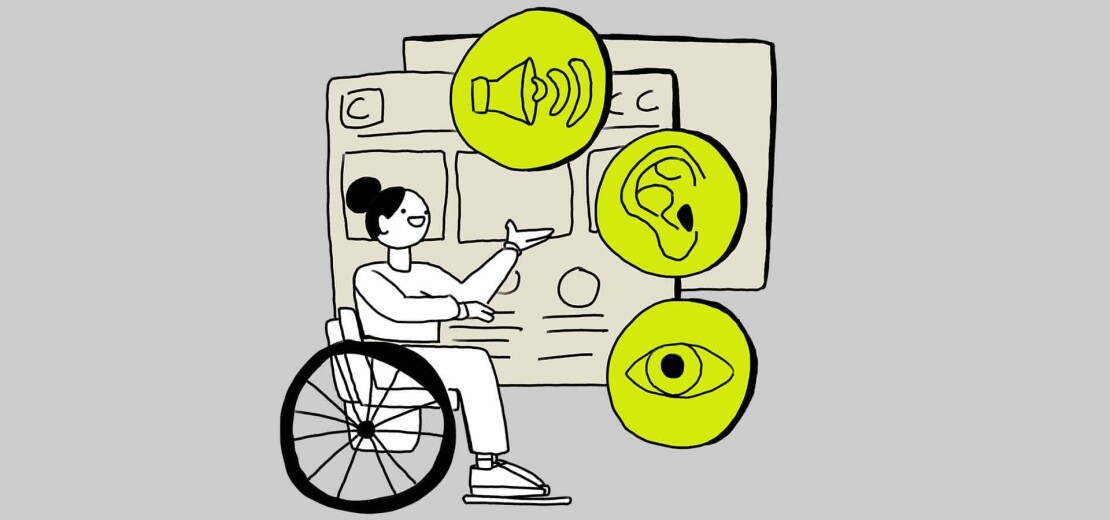
Web accessibility means that websites are designed so that they can be used by all people, regardless of their physical or mental limitations.
From June 28, 2025, web accessibility will be mandatory. If your website is not yet accessible, you should act now to avoid costly warnings and meet legal requirements. But there are many other reasons why you should focus on accessibility: a better user experience, a larger customer base, and positive effects on your SEO ranking.
Why Accessible Websites Are Important
Legal Certainty
From 2025, websites must comply with accessibility requirements to avoid warnings. Adherence to standards such as WCAG (Web Content Accessibility Guidelines) and BITV (Barrierefreie-Informationstechnik-Verordnung) protects against legal consequences.
Expansion of Target Audience
An accessible website reaches people with disabilities, older users, and people with temporary limitations. This means you can appeal to more people and potentially gain new customers.
Improved User Experience
Accessible websites not only offer advantages to people with disabilities but also improve usability for everyone: Faster loading times, mobile optimization, and simpler navigation lead to a better user experience.

Who is affected and who is exempt?
The Accessibility Strengthening Act (BFSG) primarily obliges companies in the B2C (Business-to-Consumer) sector to design their websites to be accessible. This includes online shops as well as service providers such as doctors or hairdressers who offer online services.
Exemptions:
Micro-enterprises with fewer than 10 employees and a maximum turnover of 2 million euros are not obliged to design their website to be accessible. However, companies that exceed these thresholds must act – regardless of the industry.
How is accessibility ensured?
To make your website accessible, you should take the following steps:
Determine the needs of your target group and the measures required.
Analyze your website for technical and content-related barriers. This includes, for example, checking for alt texts for images, correct contrasts, logically structured forms, and clear navigation.
Create a concrete plan to address the identified weaknesses and implement it.
Train your team on accessibility so that all employees can understand and implement its importance.
Technical and Content Review
Technical Review:
Utilize tools such as Lighthouse, Google’s automated tool, to audit your website for accessibility. Pay attention to aspects such as:
- Alt text for images
- Sufficient color contrasts
- Labeled forms
- Consistent navigation
Content Review:
Use clear and simple language to make the text understandable for all users. This includes avoiding jargon and explaining complex terms.
Easy Language (optional):
Create content in easy language to reach an even broader audience. This can be done through separate pages or sections.
Ongoing Maintenance and Adjustments:
Accessibility is not a one-time project but an ongoing process. Therefore, it is crucial to conduct regular technical and content reviews and continuously adapt the website. Documenting the measures taken and providing regular training for your team are also essential.

Conclusion
The introduction of the accessibility obligation from 2025 presents companies with new challenges, but also offers many opportunities: greater reach, improved user experience, and protection against warnings. If you act now and make your website accessible, you will benefit both legally and economically. Use the time until the obligation comes into force and start optimizing now!
Do you have questions?

Cirilla Lanz
Interim Head of Web/Digital

Related articles

The company's DNA strand
With the imprint, as the operator of a website, you show your visitors who they are dealing with here. This...

Social Media Campaigns
With the imprint, as the operator of a website, you show your visitors who they are dealing with here. This...

